Jiangmen's mosquito eradication campaign has recently gone viral on short
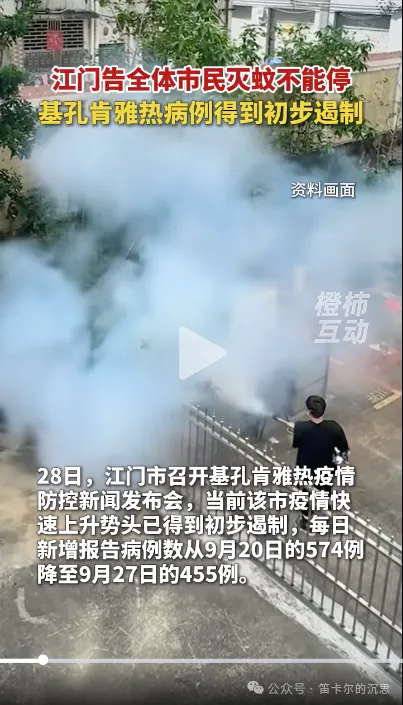
video platforms. Images of the city filled with white fog, potted plants being
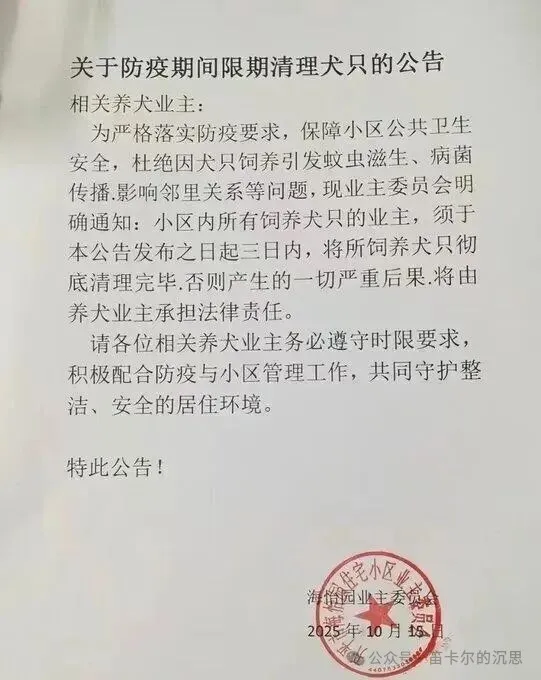
removed, trees being chopped down, and even notices in neighborhoods
requesting "dog removal."
These scenes are shocking. Is this to kill mosquitoes or to play a trick on
people?
1. From "prevention of epidemics" to "prevention of people", the familiar
script is back
The smog-filled streets are very similar to the spring of 2020. The only
difference is that back then they sprayed "disinfectant water", and now
they spray "mosquito repellent smoke".
The streets resembled a fairyland, residents unable to see the road.
Elderly people were afraid to go out, and children cried from
choking. The mosquitoes didn't seem to have decreased, but the
coughing increased.
This "mosquito eradication" feels like an emotional outburst. It's not
scientific governance, but administrative impulse. It's not about
protecting lives, but about showing off power.
The moment the smoke rose, we seemed to smell that familiar smell
again - it was not the smell of potion, but the smell of power out of
control.
2. Potted plants become a "crime," while green trees become a "harm."
Community workers in Jiangmen are waging a "national war against
mosquitoes." They've removed green plants, lifted potted plants, and
cut down trees. Their rationale, sounding righteous, is that they might
breed mosquitoes.
But the problem is - mosquitoes don't just hide in flower pots, but more
importantly in dark and damp corners, sewers, and waste... Shouldn't
the latter be the ones that need to be cleaned up first?
It's easy to cut down trees, but hard to grow them; it's easy to move
potted plants, but hard to restore the ecosystem. A "mosquito
eradication campaign" ultimately became a "green destruction
campaign."
Ironically, the most effective way to reduce mosquitoes isn't by spraying
pesticides or cutting down trees, but by maintaining ecological balance .
When cities lack trees, greenery, and water circulation, mosquitoes are
more likely to thrive.
Killing mosquitoes to this extent is not scientific, it is absurd. It is not
scientific management, it is nonsense.
3. The inertia of power can be seen from the community announcement
The most outrageous scene was a notice posted in the community:
"To prevent dogs from breeding mosquitoes, please clean up within three days."
What does "cleaned up" mean? Does it mean residents should kill their
dogs, give them away, or "clear them all" altogether?
The street office later explained that the notice was a random one from
the property management committee. But the question remains: why is
it so brazenly issued? Why are there always people who insist on a
"zero clearance"?
This is actually a manifestation of the willful recklessness of those with
even a little power. They are accustomed to solving everything with orders,
and are accustomed to using extremes to cover up their incompetence.
Even if the target is just a mosquito, they have to put on a "full mobilization"
show.
4. "Everything is about prevention and control"
We are very familiar with this logic: first it was "for safety", then "for prevention
and control", and finally it became "for your own good".
Under this logic, every action can be justified. Spraying pesticides, cutting down
trees, moving pots, checking homes, sealing doors— all can be justified with
plausible excuses.
But what is truly eliminated is never the mosquitoes, but the rights of local
citizens and the common sense of prevention and control.
Mosquitoes haven't been eradicated, but people have been "educated" to be
more obedient. Society's sense of security has increased, but individual sense
of security has disappeared.
This is the most terrifying thing.
True mosquito control relies on scientific management: clearing stagnant water,
unclogging sewers, improving drainage systems, and strengthening scientific
education. These are the truly effective measures.
But those with a bit of power prefer the efficiency of a "one-size-fits-all"
approach and the political achievements that "go viral." So, smoke was
sprayed, trees were cut down, dogs were scared away, and mosquitoes laughed.
Anyone who has read a little history should also know the consequences of the
" Sparrow Elimination Campaign ".
5. Jiangmen’s mosquito eradication campaign is actually a “governance show”
This mosquito eradication campaign is like a performance. Leaders demand results,
grassroots organizations demand action, and the media demand visuals. Spraying
pesticides, felling trees, hanging potted plants—the visual impact is unparalleled.
This isn't scientific prevention and control, but rather an administrative show. It's not
about addressing the problem, but about showing off.
We've seen countless performances like this. Each time, there are slogans, mobilizations,
and spectacular scenes, but in the end, all that's left are ruins, resentment, and jokes.
Jiangmen isn't the first city to engage in this kind of "performance-style governance,"
nor will it be the last. Behind this lies a common logic: everything I do isn't for you to see,
but for those above me.
What we truly need to eliminate aren't just flying mosquitoes, but also those "power mosquitoes"
who, with even the slightest bit of power, seek to harass others. They don't survive on blood,
but on fear. Every absurd action is a feast for them.
Jiangmen's "mosquito eradication campaign" is ostensibly an epidemic prevention measure,
but in reality, it's a reflection of governance anxiety. When urban rationality gives way to
capriciousness and blindness; when the instincts of power overshadow science and rationality,
no amount of smog can obscure the question in people's minds:
Is this about killing mosquitoes or playing a prank on people?